High-pressure shock tubeGeometry and diagnosticsDriven section6.6 m length; 10.16 cm internal diameter.Driver section2.2 m length; 10.16 cm internal diameter.Intermediate section9.14 cm length; 7.62 × 7.62 cm square cross-section.ConfigurationSingle- and double-diaphragm arrangements with pre-scored aluminium diaphragms.Shock velocimetry12 PCB 112B05 piezoelectric pressure transducers.Measurement capabilityReflected-shock ignition and chemical-kinetics measurements; shock-velocity variation in single- and double-diaphragm configurations.(Kashif, Physics of Fluids 36 (2024); DOI: 10.1063/5.0205160.)
Low-pressure shock tubeGeometry and diagnosticsDriven section9.1 m length; 14.22 cm internal diameter; electro-polished stainless-steel bore.Driver sectionAdjustable length, up to the driven-section length.DiaphragmPolycarbonate.Shock velocimetryFive piezoelectric pressure transducers distributed over the final 1.3 m of the driven section.Mixture preparationHeated, internally stirred mixing tank for gaseous and liquid-fuel mixtures.Measurement capabilityLaser absorption and cavity-enhanced absorption resolve species histories behind reflected shocks. Shock-jump relations determine the reflected-shock temperature and pressure.(Mhanna, Proceedings of the Combustion Institute 40 (2024) 105733; DOI: 10.1016/j.proci.2024.105733.)
Rapid compression machineConfigurationAn opposed-piston rapid compression machine with a heated reaction chamber and creviced piston heads. The piston geometry limits boundary-layer entrainment into the compressed core gas.Measurement capabilityPressure histories and laser diagnostics resolve ignition and species evolution following compression, supporting studies of low-temperature ignition chemistry.
Miniature shock tubesMeasurement capabilityMiniature shock tubes support shock-wave generation and gas-dynamic measurements at reduced length scales. Pressure diagnostics and optical imaging resolve wave propagation and shock interactions with the test medium.
High-speed camerasPhotron FASTCAM NOVA S20FASTER high-speed monochrome camera for time-resolved flow and combustion imaging.Sensor1024 × 1024-pixel CMOS sensor; selectable 10-bit and 12-bit recording.Full resolution18,750 frames per second at 1024 × 1024 pixels (10-bit); 16,500 frames per second at 1024 × 1024 pixels (12-bit).20,000 fps mode1024 × 992 pixels (10-bit).Maximum rateUp to 1,100,000 frames per second at reduced resolution (128 × 16 pixels), Type 1100K.ExposureGlobal electronic shutter down to 0.2 µs, independent of frame rate.SynchronizationExternal synchronization and trigger inputs; 1/10 Gigabit Ethernet control and image transfer.Photron FASTCAM SA-X2 · CERP shared equipmentAdditional high-speed imaging is available through CERP (formerly CCRC), subject to booking and equipment availability.ConfigurationFASTCAM SA-X2 Type 200K.Full resolution12,500 frames per second at 1024 × 1024 pixels.High-speed mode13,500 frames per second at 1024 × 1000 pixels.Maximum rateUp to 216,000 frames per second at reduced resolution for Type 200K.Digitization12-bit monochrome recording.SynchronizationExternal frame synchronization and triggering.Photron SA-X2 specifications ↗Diagnostic techniquesHigh-speed and schlieren imaging resolve transient density gradients, shock propagation, ignition development, shock–droplet interactions and shock–jet interactions.
Optical imaging capabilitiesShock-tube and RCM optical sectionsDual-camera shock-tube imaging setupOptical sections and chamberHPSTOptical section of the high-pressure shock tube.LPSTOptical section of the low-pressure shock tube.RCMOptical chamber of the rapid compression machine.Diagnostic techniquesOptical access supports high-speed imaging and schlieren measurements in shock-tube and rapid-compression experiments.Measurement capabilityTime-resolved visualization of shock propagation, ignition development, shock–droplet interactions and shock–jet interactions.
Fast-acting valveConfigurationThe ISTA Pneumatics electro-pneumatic valve provides diaphragm-free separation of the driver and driven sections.CapabilityA retracting closure releases the driver gas into the driven section, enabling repeatable shock-tube experiments without diaphragm replacement.
UV–visible–near-infrared pulsed Ti:sapphire laserSystemSpectra-Physics Tsunami 3950C-15HP mode-locked Ti:sapphire oscillator.ConfigurationMillennia 532 nm pump and flexible harmonic generators.Spectral coverage700–1080 nm fundamental; 350–540 nm second harmonic; 233–360 nm third harmonic; 175–270 nm fourth harmonic. Harmonic coverage depends on the available conversion crystals and oscillator configuration.Operating modePulsed; picosecond configurations are documented in the installed-system test.Output performanceHistorical installation test (8 July 2014): 2.9 W at 800 nm in a 15 ps configuration, with 12.5 W pump power. This is fundamental output, not UV output.Tuning and controlOscillator wavelength selection and crystal tuning for harmonic conversion; pulse characterization with PulseCheck.Measurement capabilityTime-resolved UV, visible and near-infrared spectroscopy; radical and hydrocarbon reaction studies.UV diolefin absorption and kinetics: Liu and Farooq (2023) ↗
UV–visible–near-infrared continuous-wave Ti:sapphire laserSystemM Squared SolsTiS continuous-wave Ti:sapphire laser.ConfigurationEquinox 532 nm pump, ECD-X frequency doubler and EMM-532-SFG mixing module.Spectral coverage700–1000 nm fundamental; installed conversion branches at 365–395 nm (ECD-X) and 303–347 nm (EMM-532-SFG). These are separate output bands.Operating modeContinuous-wave, single-frequency operation.Output performanceLinewidth: 200 kHz in the legacy laboratory specification. Output power depends on wavelength and conversion branch.Tuning and controlLaser/controller interface with wavelength scanning and reference-lock documentation.Measurement capabilityHigh-resolution molecular spectroscopy, including OH, CH and CN radical diagnostics.
Near- and mid-infrared optical parametric oscillatorSystemTOPTICA TOPO singly resonant optical parametric oscillator.Configuration1064 nm amplified diode-laser pump; separate signal and idler outputs.Spectral coverage1450–2070 nm signal; 2190–4000 nm idler. The two output branches do not provide continuous coverage across their intervening gap.Operating modeContinuous-wave.Output performanceHistorical manufacturer specifications: signal linewidth <100 kHz and idler linewidth 2 MHz. The 10 W value in the legacy laboratory description refers to pump power.Tuning and controlCrystal position, temperature, etalon and fine frequency tuning. Mode-hop-free scans cover local intervals within the coarse tuning range.Measurement capabilityResolved molecular absorption spectroscopy in near- and mid-infrared bands.TOPO manufacturer specifications and characteristic tuning curves ↗
Mid-infrared external-cavity quantum-cascade laserSystemDaylight Solutions UT-series external-cavity quantum-cascade laser.ConfigurationQCL gain chip with an external wavelength-selective cavity.Spectral coverage9.53–12.8 µm in the laboratory inventory.Operating modePulsed spectroscopy.Output performancePower and pulse characteristics depend on wavelength and the operating configuration.Tuning and controlManual or automated external-cavity wavelength selection.Measurement capabilityFingerprint-region absorption measurements, including ethylene spectroscopy and cavity-enhanced shock-tube diagnostics.
Mid-infrared multi-module quantum-cascade laserSystemDaylight Solutions MIRcat-QT-2400 multi-module quantum-cascade laser.ConfigurationMultiple QCL gain modules with motorized diffraction-grating tuning.Spectral coverage6.8–11.9 µm in the laboratory inventory; available output varies with the installed module.Operating modeContinuous-wave operation.Output performanceLegacy laboratory specification: maximum output 450 mW; linewidth <100 MHz. Performance varies with gain module and wavelength.Tuning and controlLegacy maximum scan speed: 30 cm⁻¹/ms. Scans are not globally mode-hop-free across the complete tuning range.Measurement capabilityRapid absorption scans and fixed-wavelength kinetics measurements of ethers and other molecular species.MIRcat absorption and kinetics measurements of 1,3-dioxolane ↗
Long-wave infrared difference-frequency sourceSystemCustom difference-frequency-generation laser source.ConfigurationDaylight Solutions 41058-MHF external-cavity QCL and a CO₂ gas laser mixed in orientation-patterned GaAs (OP-GaAs).Spectral coverageQCL inventory range: 5.420–5.850 µm. Laboratory DFG configuration: 12.7–15 µm. A published configuration demonstrated approximately 11.6–15 µm.Operating modeQuasi-CW DFG with a continuous-wave QCL and a kHz-pulsed CO₂ laser in the published configuration.Output performancePublished DFG linewidth: approximately 2.3 MHz. Output power depends on the pump and CO₂ line selection.Tuning and controlQCL wavelength tuning, CO₂ line selection and nonlinear-crystal phase matching; separate laser controllers.Measurement capabilityResolved long-wave fingerprint spectroscopy, including ethylene absorption and benzene/HCN diagnostics.DFG source, tuning curves and molecular spectra: Elkhazraji et al. (2023) ↗
LED illuminationSystemThorlabs SOLIS-365C, SOLIS-455D, SOLIS-525D, SOLIS-850C and SOLIS-3C; mounted M850LP1 LED.ConfigurationSeparate narrowband and daylight-white LED sources.Spectral coverageNominal wavelengths of 365, 455, 525 and 850 nm; broadband white-light output from SOLIS-3C.Operating modeLED illumination with driver-controlled intensity.Output performanceNominal SOLIS bandwidths (FWHM): 10 nm at 365 nm, 21 nm at 455 nm, 35 nm at 525 nm and 39 nm at 850 nm. These are LED bandwidths, not laser linewidths.Tuning and controlSource selection and intensity control; the LEDs do not scan continuously across the spectrum.Measurement capabilityBand-selective and broadband irradiation of reaction and measurement volumes.Thorlabs SOLIS nominal specifications ↗
Solar simulatorSystemPerfectLight xenon-lamp illumination system.ConfigurationBroadband irradiation of a windowed catalytic reaction cell.Spectral coverageUV, visible and near-infrared illumination; delivered coverage depends on the lamp, optics and filters.Operating modeBroadband lamp illumination.Output performanceIrradiance and spectral distribution depend on the measurement position and installed filters.Tuning and controlFilter selection, illumination geometry and lamp control.Measurement capabilityPhotocatalytic measurements under broadband illumination.
Infrared DFB semiconductor lasersSystemnanoplus distributed-feedback semiconductor laser sources.ConfigurationIndividual infrared devices in temperature-controlled mounts, including interband-cascade sources.Spectral coverageInventory center wavelengths: 2551, 2679, 2837, 2929, 2990, 3348.5 and 3372 nm. Each device covers a limited band around its center.Operating modeSingle-mode spectroscopy.Output performancePower and linewidth depend on the individual device and operating point.Tuning and controlInjection-current scans and temperature tuning with current/temperature controllers.Measurement capabilityMolecular absorption, cavity-enhanced detection and multi-species measurements near 3.3 µm.nanoplus ICL multi-species detection using CEAS and neural networks ↗
Mid-infrared DFB quantum-cascade lasersSystemAlpes Lasers distributed-feedback quantum-cascade lasers.ConfigurationMultiple individual sources in HHL packages.Spectral coverageSelected bands near 4.55–4.57, 4.84–4.85, 5.45–5.46, 5.60–5.61, 6.24–6.26, 7.60–7.68, 7.79–7.84, 9.04–9.08 and 13.69–13.74 µm. These ranges belong to different devices.Operating modeContinuous-wave and pulsed devices; mode depends on the selected QCL.Output performancePower, linewidth and pulse characteristics are device-specific.Tuning and controlCurrent and temperature tuning; driver and cooling requirements depend on the individual unit.Measurement capabilityBand-selective absorption spectroscopy and time-resolved gas measurements.
Long-wave infrared quantum-cascade laserSystemmirSense UN0674C002HNA single-mode QCL.ConfigurationClosed laser head with a collimating lens and a water-cooled thermoelectric cooler.Spectral coverageNominal 674.0 cm⁻¹ (approximately 14.84 µm); specified tuning range 673.1–675.2 cm⁻¹.Operating modeContinuous-wave.Output performanceSpecified output >2 mW at the nominal wavenumber; side-mode suppression >25 dB; full-angle beam divergence <10 mrad.Tuning and controlCurrent/temperature control. Datasheet cooling-water range: 20–30 °C.Measurement capabilityLong-wave molecular fingerprint absorption spectroscopy.
Near-infrared DFB diode lasersSystemFiber-coupled distributed-feedback diode laser sources.ConfigurationIndividual semiconductor lasers with current and temperature control.Spectral coverageSelected near-infrared bands. Inventory examples include devices near 1388, 1392 and 1469 nm; these are separate sources rather than a continuous tuning range.Operating modeSingle-mode, continuous-wave sources.Output performancePower and linewidth are device-specific.Tuning and controlInjection-current and temperature tuning within each device band.Measurement capabilityWavelength-resolved near-infrared molecular absorption measurements.
Photothermal fixed-bed reactorReactor configurationThe PerfectLight PLR-SCR100L couples a fixed catalyst bed with electrical heating and three-ring LED illumination at 450 nm. Independent optical and thermal inputs support measurements of catalytic conversion under irradiation.Technical specificationsSystem dimensions700 × 800 × 480 mm (width × height × depth).Temperature and pressureMaximum temperature 873.15 K. Reactor pressure limit: 30 bar at 573.15 K; 10 bar at 873.15 K.Gas deliveryThree inlet channels; 100 mL min⁻¹ full-scale flow, nitrogen-calibrated, with a control range of 2–100% of full scale.Preheating323.15–673.15 K for reactant vaporization and premixing.Temperature stability±1 K.
Long-wave infrared dual-comb spectrometerSystemCustom long-wave infrared dual-comb spectrometer.ConfigurationTwo 250 MHz Menlo C-Fiber erbium-fiber oscillators with amplified near-infrared branches and orientation-patterned GaP frequency conversion.Spectral coverage7.5–11.5 µm; optical bandwidth up to 9 THz.Operating modeComb-resolved spectroscopy. Faster acquisition uses a reduced optical bandwidth.Output performanceAcquisition demonstrated at 26 kHz over 0.8 THz. The 250 MHz comb spacing is not a laser linewidth.Tuning and controlNear-infrared reference beat notes track relative timing and carrier-phase fluctuations for correction of the interferograms.Measurement capabilityBroadband absorption measurements of multiple gas species, including CH₄, N₂O and C₂H₄.Moretti, Optics Letters 49 (2024), 1844–1847 ↗Ahmad, Applied Optics 65 (2026), 3961–3967 ↗Detection and digitizationDetectionVIGO PVI-4TE-10.6 detector with VPAC-1000F module; thermoelectric cooling and 500 MHz detection bandwidth.Digitization200 MS/s GaGe Razor Express digitizer.Developed through collaboration between KAUST, Politecnico di Milano and Université Laval.Example transmission spectrum: measured data, HITRAN comparison and residuals. This is a molecular measurement, not the source emission envelope.
Visible continuous-wave dye laserSystemSirah Matisse DS actively stabilized dye laser.ConfigurationDye gain medium in an actively stabilized ring-laser cavity.Spectral coverageWavelength coverage depends on the selected dye and installed optical coatings.Operating modeContinuous-wave dye-laser operation.Output performanceOutput power and linewidth depend on the installed dye, pump and stabilization configuration.Tuning and controlWavelength selection and active frequency stabilization.Measurement capabilityTunable visible-light spectroscopy and high-resolution optical measurements.





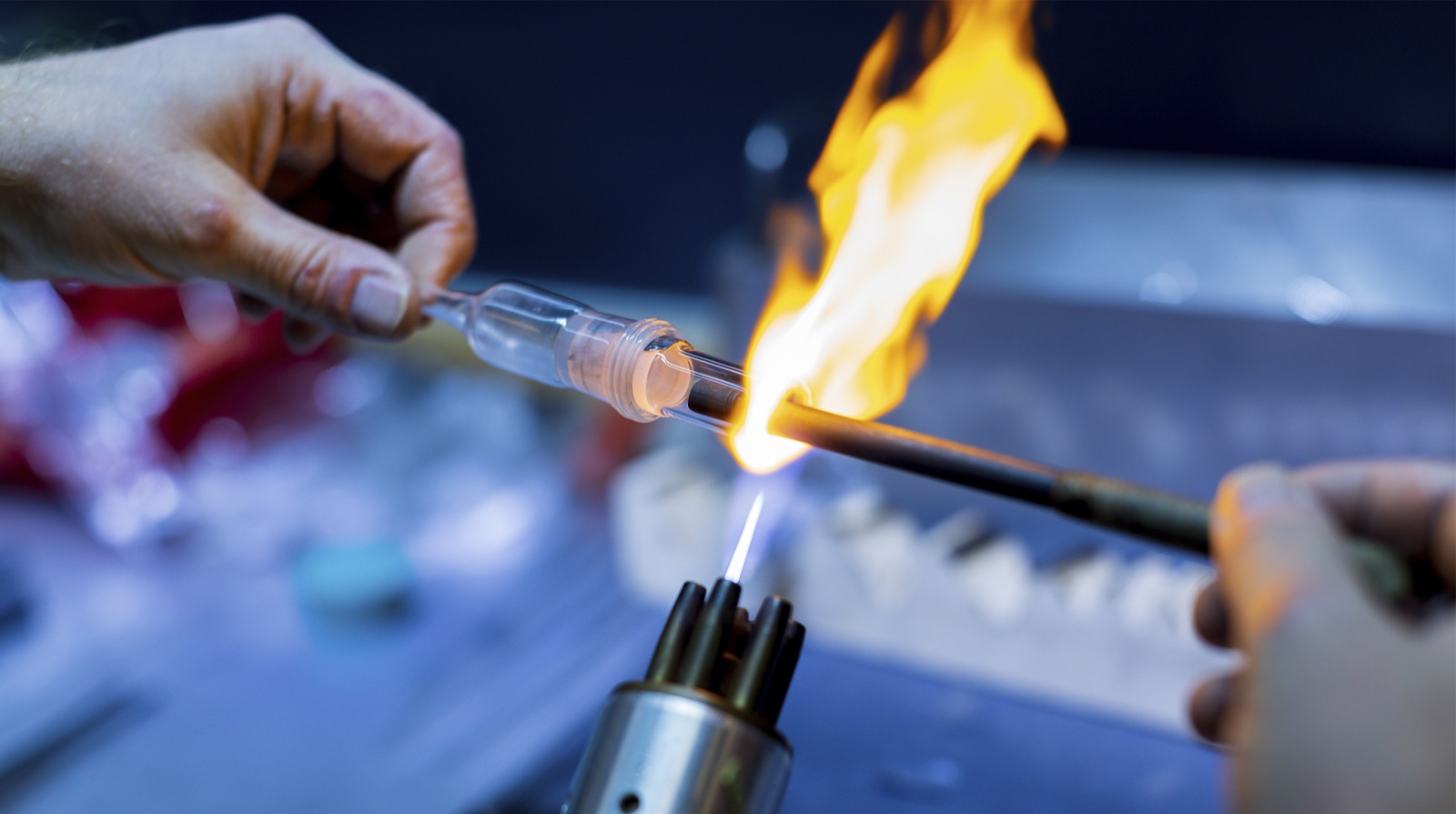 Prototyping & Product Development ↗Machining and workshops, scientific glassblowing, electronics fabrication (EFL), design and rapid prototyping.
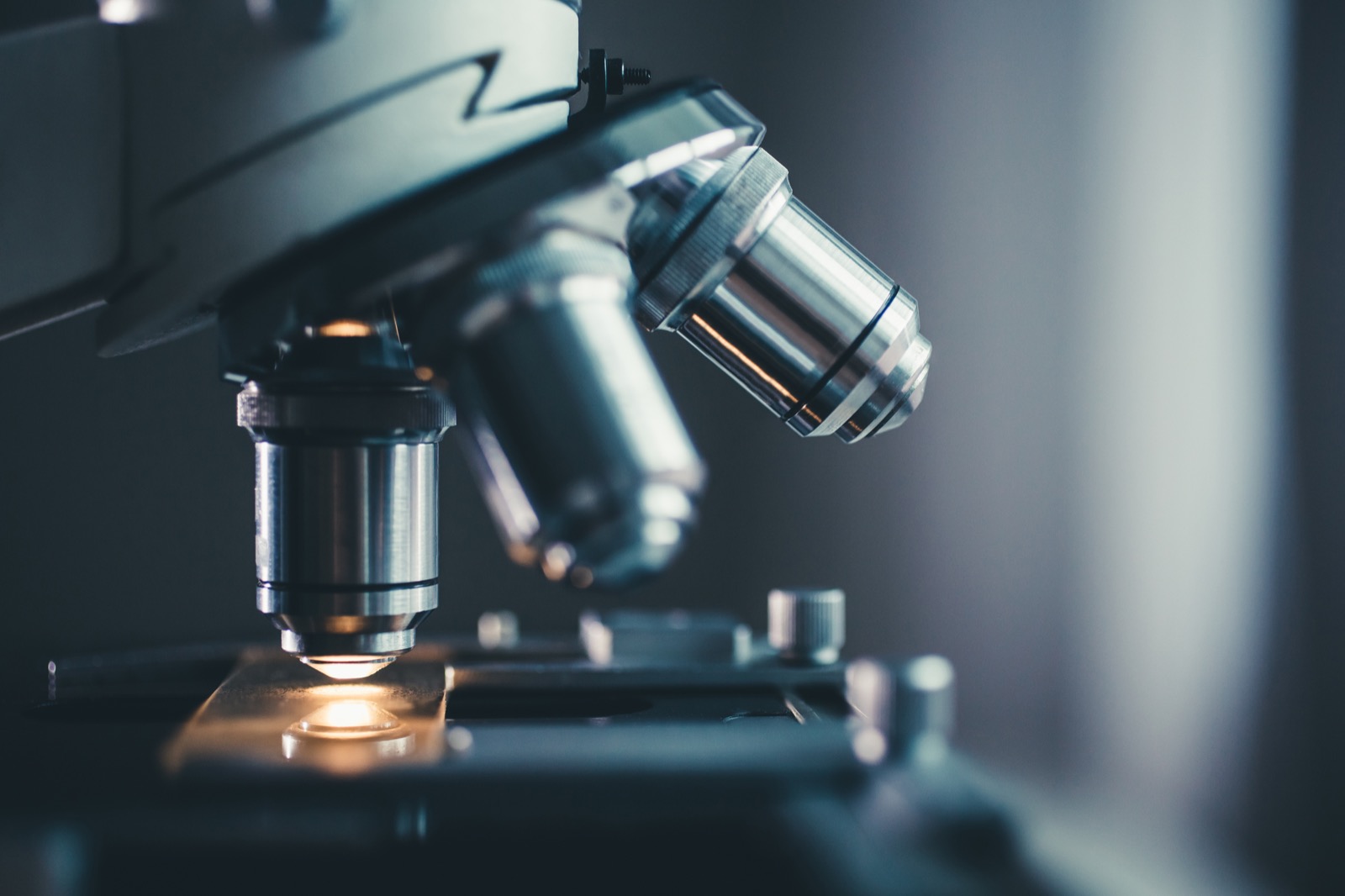 Imaging & Characterization ↗Electron microscopy, NMR, surface analysis and optical microscopy.
 Analytical Chemistry ↗Chromatography, mass spectrometry and chemical analysis.
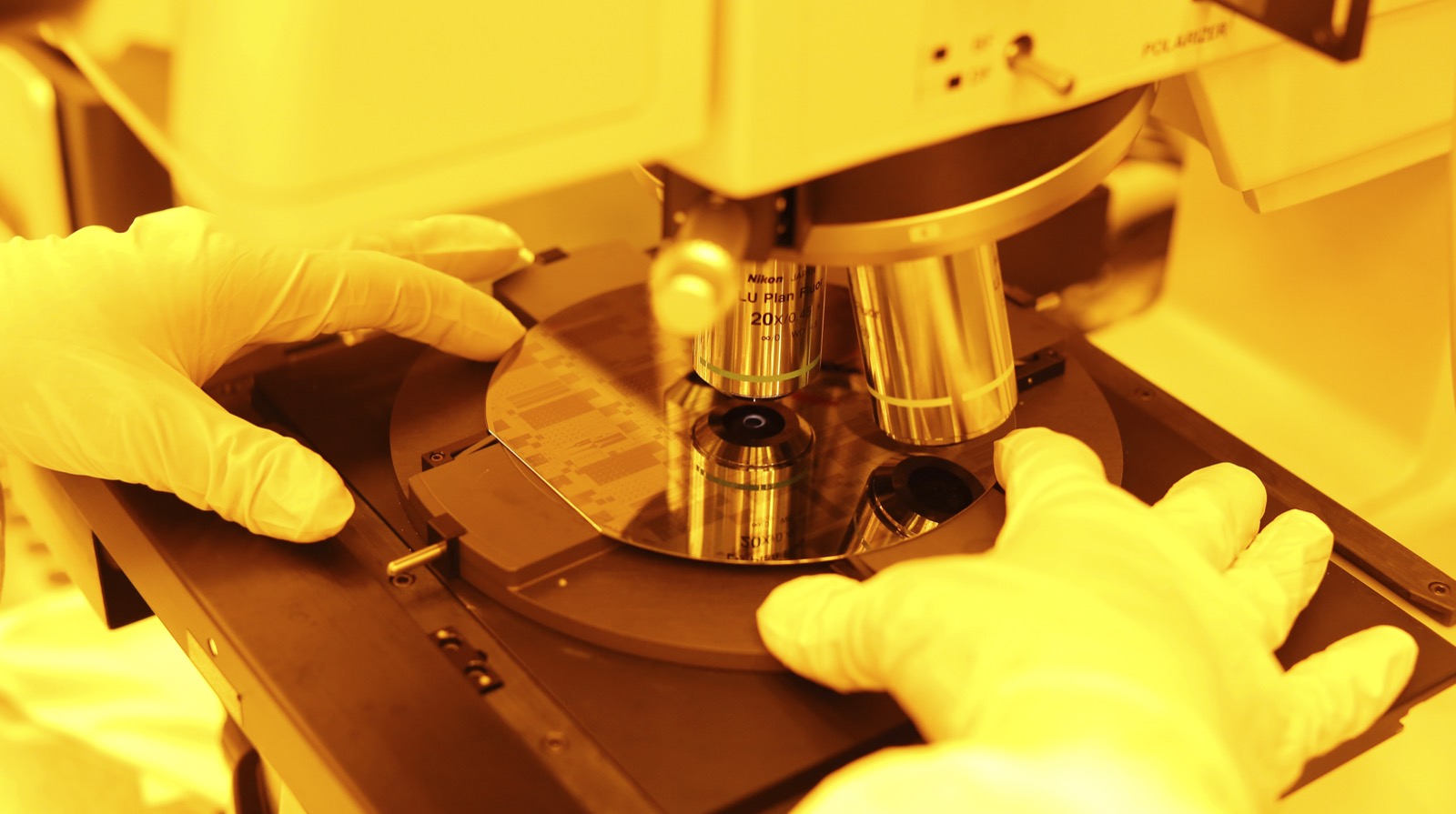 Nanofabrication ↗Lithography, deposition, etching and microfluidics.
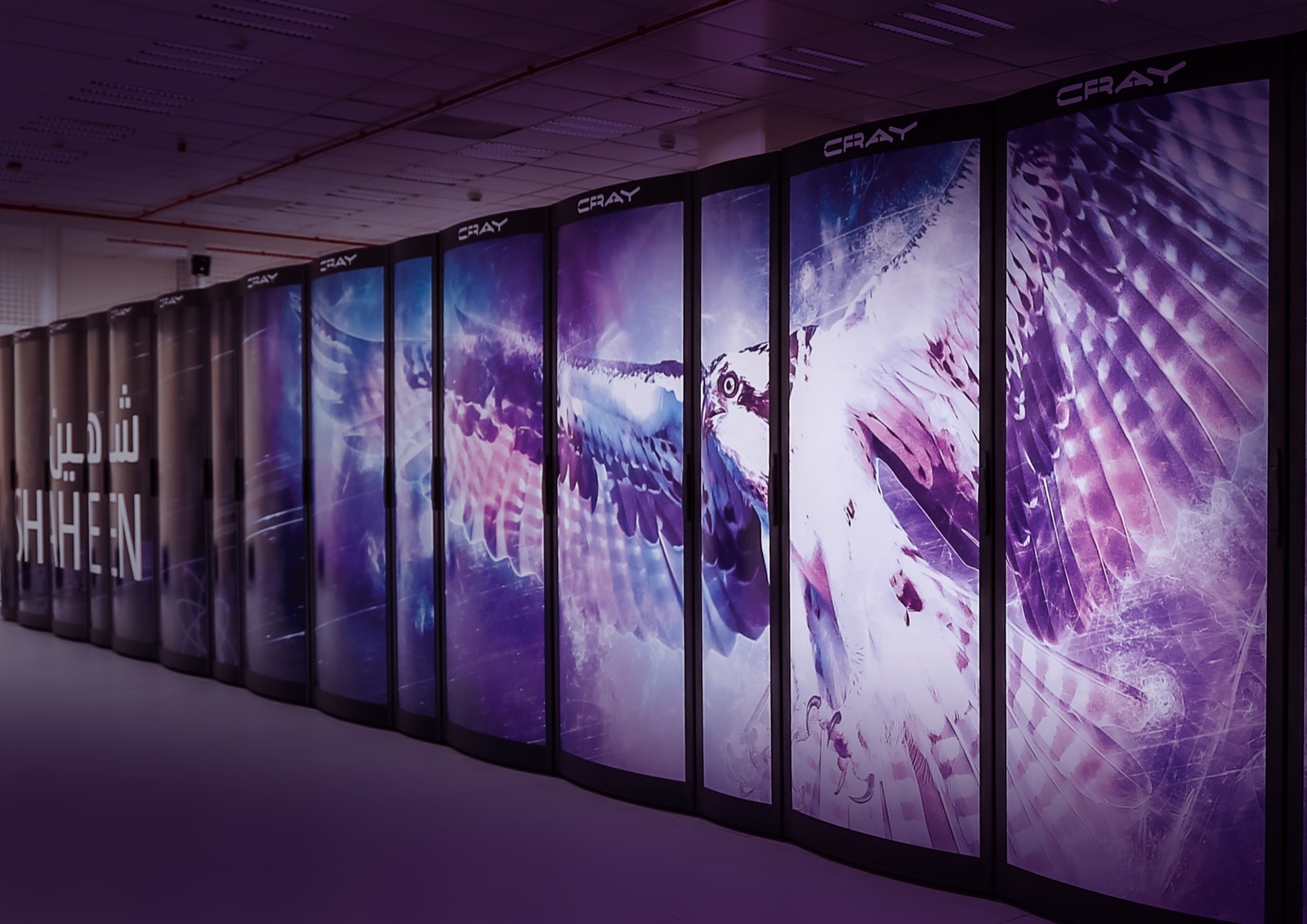 Supercomputing ↗High-performance computing for scientific simulation.
 Visualization & Data Science ↗Scientific visualization, machine learning and data analysis.
